
Category: Rants

  • How much is enough?

    How much is enough?

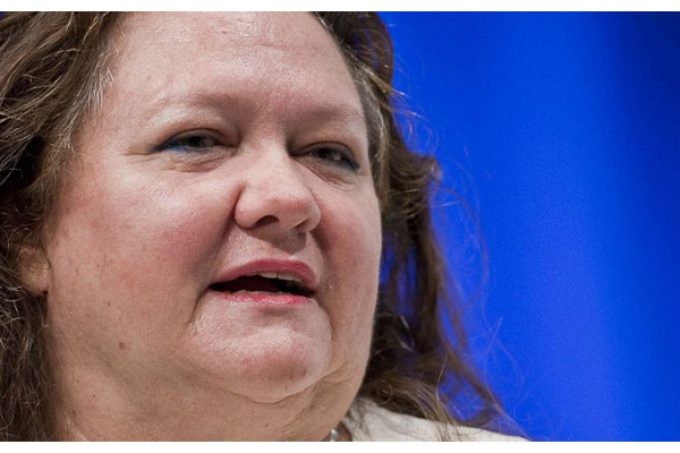
    I saw this in the paper today. It tells us that Australia’s own Gina Reinhart is now officially the world’s richest woman. Hooray! Her fortune now stands at almost 30 billion dollars.

    For people like this, how much is enough?

    And what does she personally do that makes her worth this sort of money? Does she dig holes? Carry ore around? Serve customers? Do the books? Does she do anything useful?

    I know some will argue that she generates wealth for others by being an astute operator, and thus providing jobs and paying taxes. That may be so, but does that really make her worth $30 billion? That’s a LOT of money – much more than she could require to live better than anyone could imagine.

    And whatever good she might do, can it balance out the harm that must be caused by this sort of concentration of wealth? That money isn’t out floating around in the rest of the economy (where you and I might occasionally see some of it) if it’s stuffed in her bank account (yes, I know her wealth is on paper and that’s not the same as money in the bank, but still…)

    At some point, from a group dynamics point of view, someone who manages to accumulate and hold onto such disproportionate wealth HAS to start being viewed by the rest of society (or at least a large part of it) as causing harm to the group as a whole, don’t they?

    Perhaps that’s why Gina is buying media resources, so she can start to manage the messages that we hear about her, and not hate her.

    Will we one day turn on Gina and people like her – the Wall Street bankers, mega-rich CEOs and their ilk?

    Will we need a revolution to get rid of the obscenely rich? It’s hard to see how else such entrenched privilege can ever be undone.

  • Religion and the “Moral compass”

    Religious people often claim that atheists can’t possibly have a moral compass that will guide us to behave well, since we have no God to tell us what is right and what’s wrong.

    I find it ironic, therefore, to read in today’s Age an article about a Rabbi at a Jewish college here in Melbourne who “has changed his evidence about his knowledge of alleged paedophilia and conceded he was aware in the early 2000s of rumours that a former security guard had molested children”.

    Suffice it to say that the subject of the rumours was not immediately reported to the police.

    What would you do if there were rumours that a member of your staff was molesting children at your school? Just keep an eye on him and hope you hear nothing more? Or get the police involved and have it properly investigated?

    I don’t know about you, but I’d call the police in, because the consequence of not getting to the bottom of it immediately would be that kids in my care might be at risk of sexual abuse.

    I think my moral compass is in pretty good order.

    How did the Rabbi not consider this his top priority? Was his moral compass broken?

    We can only guess at what religous justification he may have had for acting as he did. Perhaps religion had nothing to do with  his decision. Either way, given that further molesting is alleged to have occurred later, it’s at the very least a spectacular failure of judgement, don’t you think?

    For the Catholics out there: Why are there still Catholics?

    More interesting reading here.

  • Technological solutions to the problems of democracy

    It seems to me that a lot of the problems caused by democracy (corruption, lack of representation, mindless politicking, fear and loathing campaigns, dog-whistling, short-termism etc) are attributable to the fact that our parliamentry system is based on very old technology – the idea that the only way the voice of the people can be heard is for those people to be organised by geographical areas where all will vote for a single person who will go and represent them and their area in a parliament somewhere.

    What this causes is a concentration of power in the hands of a few, most of whom we actually know very little about, do not really trust, and who often actually *fail* to represent our views, essentially rendering us powerless. The types of people who seek office are also often the very people least suited to serving the public good – instead they are egotistical and power-seeking, and too often prone to engaging in corrupt or unethical behaviour to maintain their positions in the system.

    So the first challenge is to reduce the power of individual representatives and parties, in favour of more direct representation of our individual views.

    We will still need some sort of system to receive and collate those views, and to coordinated the functions of government, but it should also be a system that does not require career politicians to keep running.

    By using technology to collect and collate the views of the people *directly* we would have a much more democratic system. And by stripping away the power from politicians, politics will start to attract only those ones that want to do it for the right reasons, ie that they have a *genuine* desire to make life as good as it can be for as many people as possible.

    Another problem inherent in democracy is that it accords an effectively equal weight to the vote of every person on every issue. I think this is a mistake, and one which inherently we all understand to be a mistake because we understand that not everyone is equally qualified to make decisions about particular questions.

    Here’s an obvious analogy: if you’re sick, you go to an expert and allow them to diagnose your symptoms and give you advice on how to get better. You don’t go to a builder (who you may well trust to build you a house) or a baker. You ask the expert for their opinion, and trust them to know what they are talking about.

    Most of us are also sane enough to know that we, individually, don’t know everything and are happy to defer to someone we think knows more about a subject than we do. That’s not to say that there is not a large grey area in each of these where we all might like our *opinions* to be taken into account, but we are, I think, generally prepared to accept that our opinions don’t make us experts in a particular field and that they should be weighted accordingly.

    So the second challenge is to find a system that allows expertise about a subject to add weight to the votes of those experts.

    I believe technology could be employed to address both of these challenges and that the resulting system could lead to better representation, less corruption and better decision-making.

    I believe such a system could introduce the sort of weighting of opinion based on expertise that would make democracy much better able to yield wise decisions.

    Finally, I also believe such a system could prove popular, as it enables everyone to feel that their abilities and skills will be taken into account when they vote on particular issues.

    Discuss.